You’ve seen weddings that claim to be relaxed. Hay bales in the corner, a hand-painted sign or two, maybe some bunting. But somehow the day still felt stiff — guests in heels sinking into grass, nowhere comfortable to sit, everyone shipped off to a Travelodge by 10pm.
A festival wedding should feel like the opposite. That loose, happy energy where strangers end up chatting, people wander between spaces, nobody’s watching the clock. And it’s completely achievable. But it comes from specific, practical choices — not just décor.
What Makes a Festival Wedding Actually Work
Here’s what most festival wedding Pinterest boards get wrong: they focus entirely on how things look rather than how the day flows.
A festival feels relaxed because of how it’s structured. Multiple spaces to drift between. Seating you can actually lounge in. Food when you want it, not when you’re told. No rigid timeline forcing everyone through the same motions simultaneously. And crucially — people stay. They’re not clock-watching because they’ve got a 40-minute drive back to a hotel.
The visual stuff matters, but it’s the logistics underneath that create the atmosphere. Get those right and the aesthetic follows naturally. Get them wrong and you’ve just got a traditional wedding with some nice bunting.
Why On-Site Accommodation Changes Everything
This is the single biggest factor we see separating festival weddings that feel like festivals from ones that just look the part.
When guests are staying on-site — in bell tents, tipis, camper vans, whatever works for your venue — the whole energy shifts. The evening doesn’t have a hard stop. People aren’t checking phones for taxi updates or doing mental arithmetic about driving limits. They change into comfortable clothes, grab another drink, settle into conversation.
And the next morning becomes part of the wedding itself. Bacon sandwiches, bleary-eyed laughter, stories from the night before. Some couples tell us the Sunday morning was their favourite part.
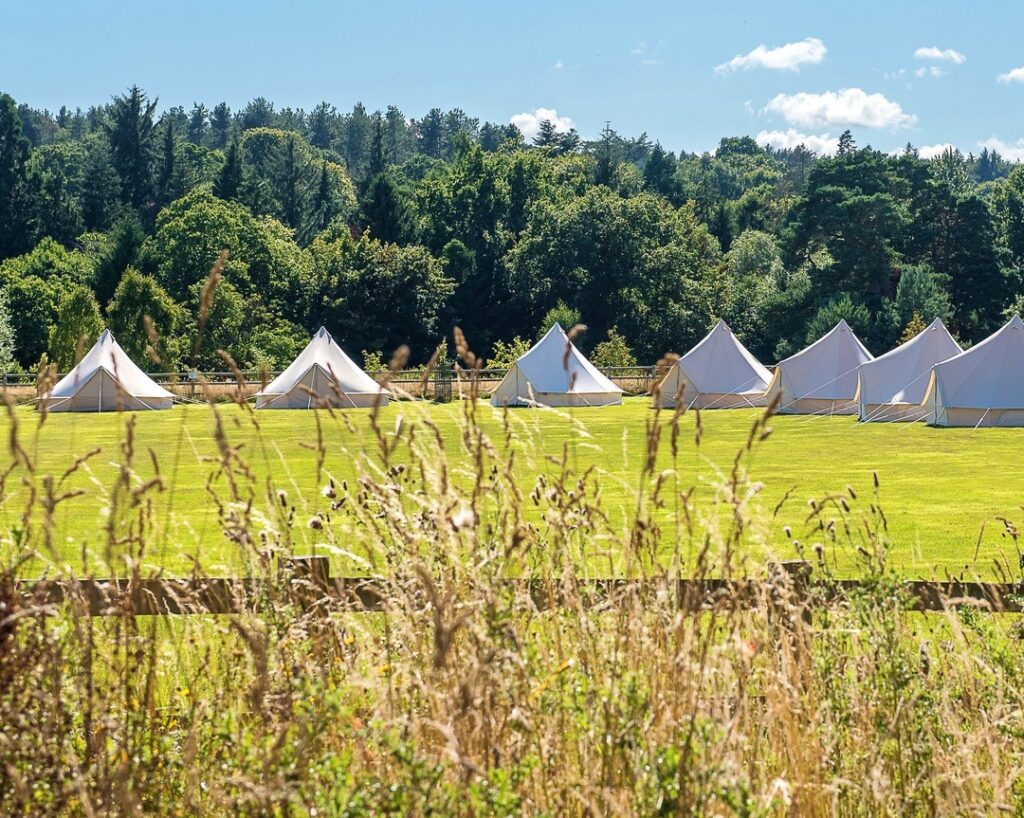
Practically, it also solves the rural venue problem. The best outdoor wedding venues in Yorkshire — farms in the Dales, estates near Harrogate, woodland spots in the Peak District — are often a 30-minute drive from the nearest decent accommodation. Asking 60 guests to sort their own transport and lodging fragments the whole experience. Providing on-site glamping keeps everyone together.
Creating Distinct Zones (Without a Festival Budget)
Real festivals have multiple stages, areas, and spaces. You’re not replicating Glastonbury, but borrowing the principle works brilliantly for weddings.
Think in terms of three or four zones with different energies:
The main event space — your ceremony and primary reception area. Probably your tipi, marquee, or barn. If you need covered space for larger gatherings or dancing, a stretch tent works brilliantly here — they’re more versatile than traditional marquees and suit the relaxed aesthetic.
The social hub — this is where bell tents earn their keep beyond just sleeping. A cluster of tents with open communal areas, fire pits, and comfortable seating creates a secondary gathering space. We often set up a “village green” feel between tent groupings where people naturally congregate.
The chill-out zone — hay bales, rugs, festoon lights, maybe some garden games. Low-key space for when the main area gets loud or people need a breather.
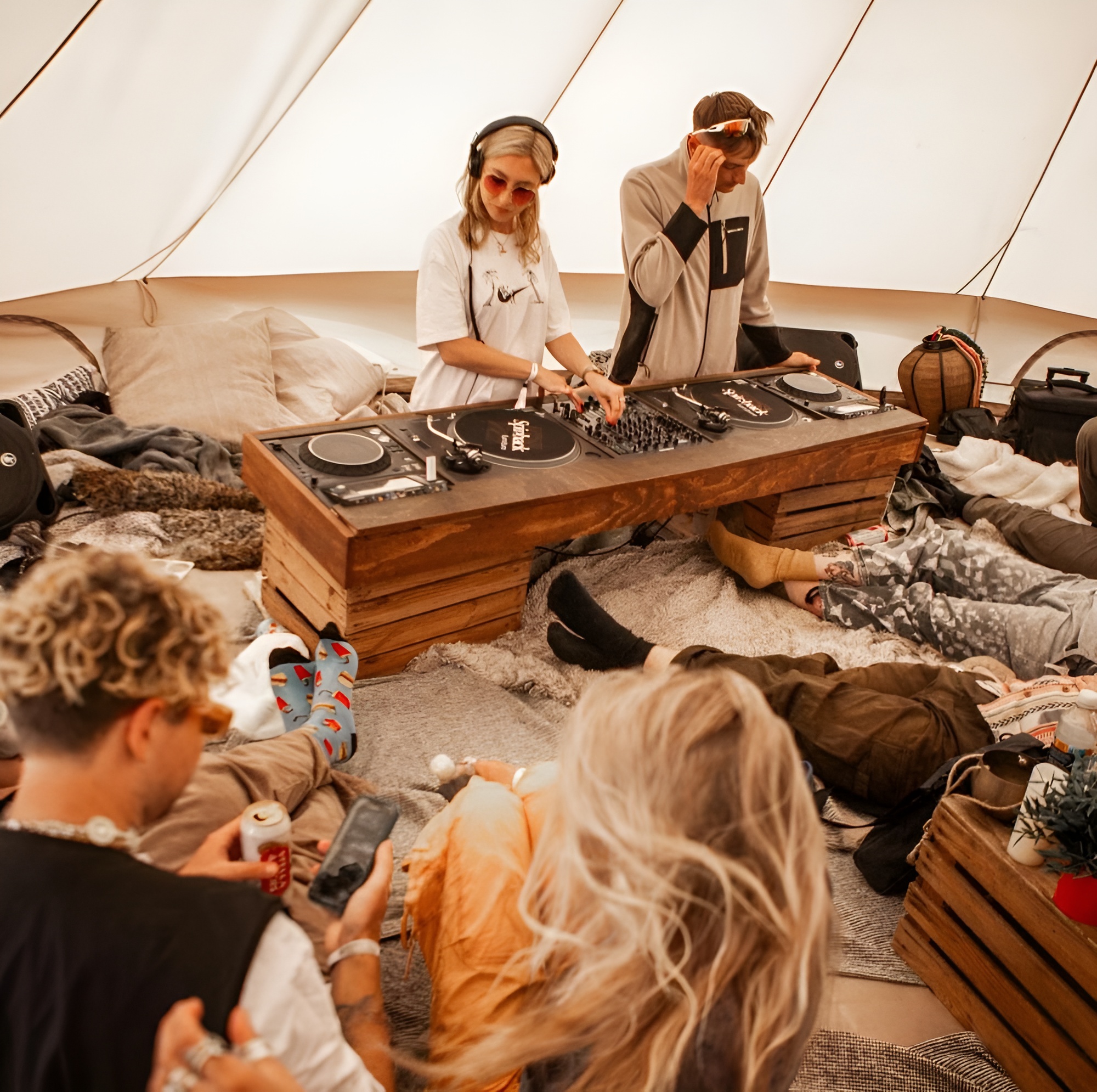
Late-night spot — fire pit, acoustic music, smaller and more intimate. Where the last 20 people end up at 1am.
You don’t need a massive budget for this. You need thoughtful placement and the right structures in the right spots.
The Practical Bits Nobody Mentions Until Three Weeks Out
After setting up hundreds of outdoor weddings across Yorkshire, Cheshire, and Lancashire, we’ve noticed the same surprises catch couples out repeatedly. None of these are problems — they’re just things to plan for:
Toilets matter more than you think. For on-site camping, you need proper facilities — not a single portaloo. Budget for decent toilet hire with handwashing. Your guests will thank you, and it’s one of those invisible things that tanks the vibe when done poorly.
Power and lighting need a plan. Bell tents can have interior lighting, but you need to discuss power requirements with your supplier early. Festoon lighting between structures transforms the evening atmosphere but requires proper installation.
Ground conditions vary wildly. A field in the Yorkshire Dales in May is different to the same field in August — and different again to a Cheshire estate with better drainage. We’ve set up on everything from bone-dry to boggy, and there are solutions for all of it, but your supplier needs to know the venue and conditions.
Guest communication is half the battle. “Camping at the wedding” sounds obvious to you. To your 67-year-old aunt, it raises twelve questions. What should she bring? Will it be cold? Where does she actually sleep? A simple information sheet with your invites solves this.
One thing that helps enormously: we offer a guest booking form that lets your guests choose their own tent and any extras directly. Takes the coordination headache off you completely and means everyone gets what they actually need.
What Festival Weddings Cost (Realistically)
Budgets vary enormously depending on guest count, venue, and how much you’re doing yourselves versus hiring in. But for the glamping accommodation element specifically, a rough framework:
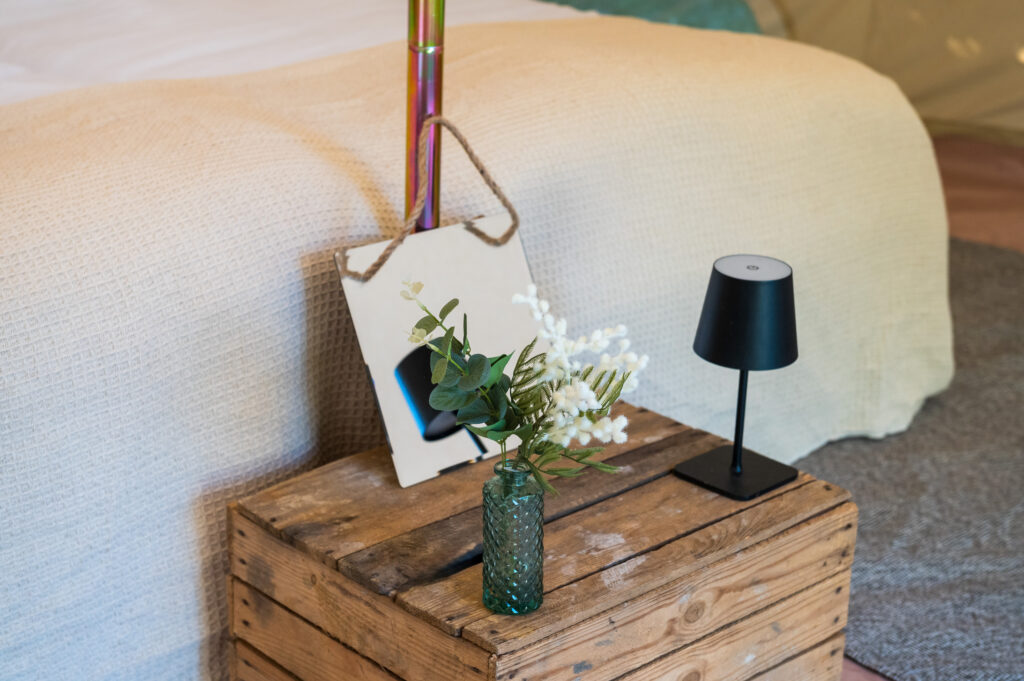
For 30-40 guests in bell tents with proper setup, furnishing, and coordination, you’re typically looking at £2,500-£4,000 in Yorkshire. That includes delivery, full setup, furnishings (beds, rugs, lighting), and pack-down.
It’s not the cheapest option versus telling everyone to book a hotel. But the atmosphere difference is significant, and when you factor in that many rural venues would require guests to book expensive taxis or limit their drinking, the value equation shifts.
Worth asking any supplier: what’s actually included? Some quotes look cheaper until you realise beds, bedding, or lighting are all extras.
When a Festival Wedding Isn’t the Right Call
Honest answer: it’s not for everyone, and that’s fine.
If a significant portion of your guest list would genuinely struggle with camping — mobility issues, strong preference for hotel comforts, very young children — forcing the format creates stress rather than relaxation. You can still achieve a relaxed outdoor wedding without the on-site accommodation element.
Similarly, if your venue doesn’t have space for a proper glamping setup (we need more room than people often expect), or if your wedding is in November, other approaches might serve you better.
The goal is the atmosphere, not the specific format. Bell tents are one very effective way to achieve it, but the underlying principle is: keep people together, create flow between spaces, remove the hard deadline.
Frequently Asked Questions
How many guests can sleep in a bell tent?
A standard 5-metre bell tent sleeps up to 4 guests comfortably. For weddings, we typically recommend couples per tent for comfort — it’s a special occasion, not a music festival.
What happens if it rains on my festival wedding?
Bell tents are fully waterproof and surprisingly cosy in poor weather. The main consideration is ground conditions and getting between spaces — we can advise on matting, covered walkways, and contingency layouts for your specific venue.
Do guests need to bring their own bedding?
Not with a proper hire company, unless they want to! Our bell tents can come fully furnished including beds, mattresses, bedding, rugs, and interior lighting. Guests just bring themselves and an overnight bag.
Can you set up bell tents at any venue in Yorkshire?
Most outdoor venues work well, but we need vehicle access for delivery and adequate space between tents. We’re happy to do a site visit or review photos to confirm feasibility — many Yorkshire venues we already know from previous weddings.
How far in advance should we book bell tent hire for a wedding?
For peak season (May-September), 6-12 months is sensible for popular dates across Yorkshire, Cheshire, and the Peak District. We do accommodate shorter notice when available, but summer weekends book up quickly.
What’s the difference between bell tents and stretch tents?
Bell tents are individual sleeping accommodation — your glamping village. Stretch tents are larger covered structures for ceremonies, dining, or dancing. Many couples use both together to create the full festival wedding setup.